Earthquake Valve Installation That Your Insurance Company Will Actually Love
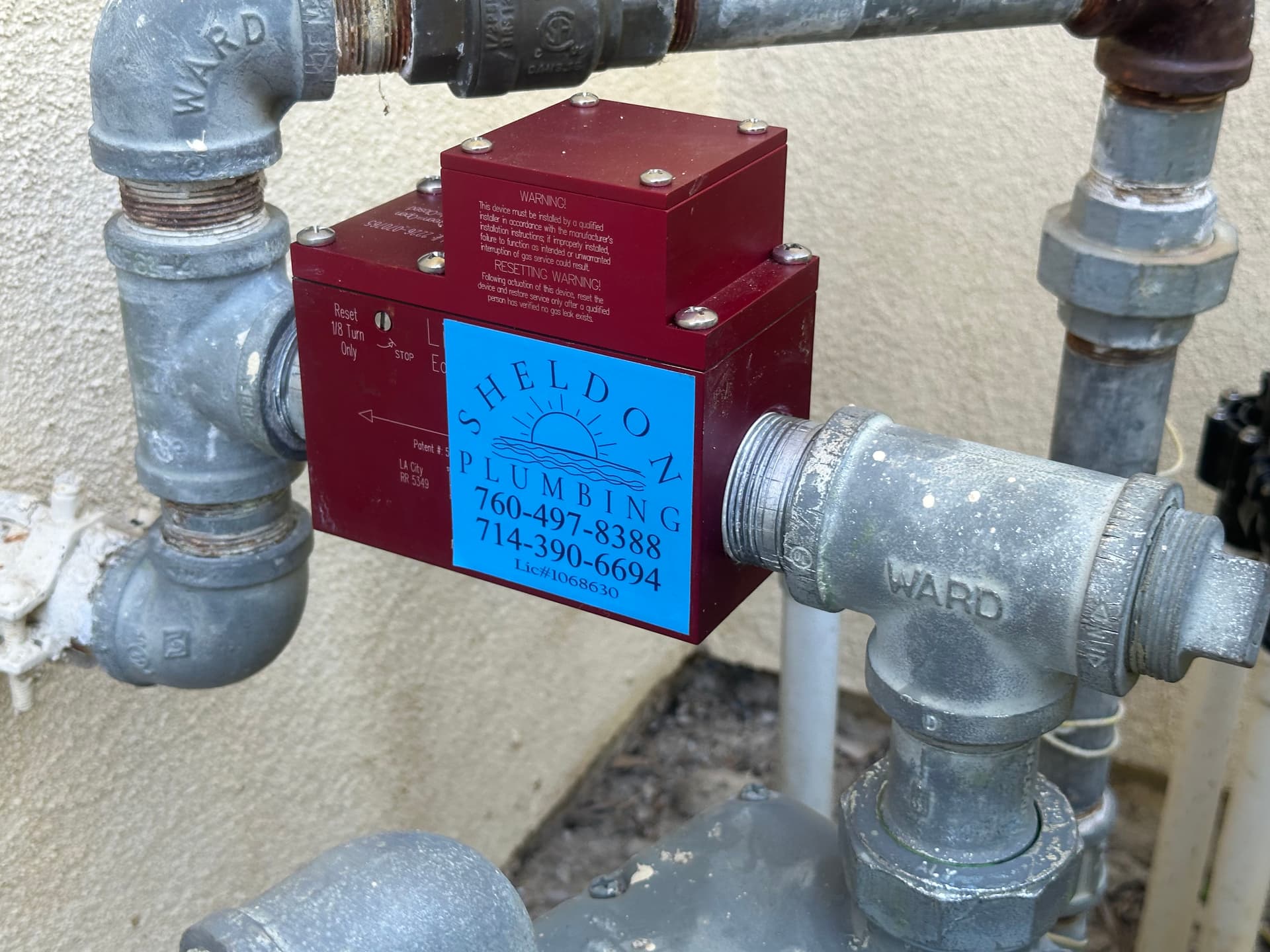
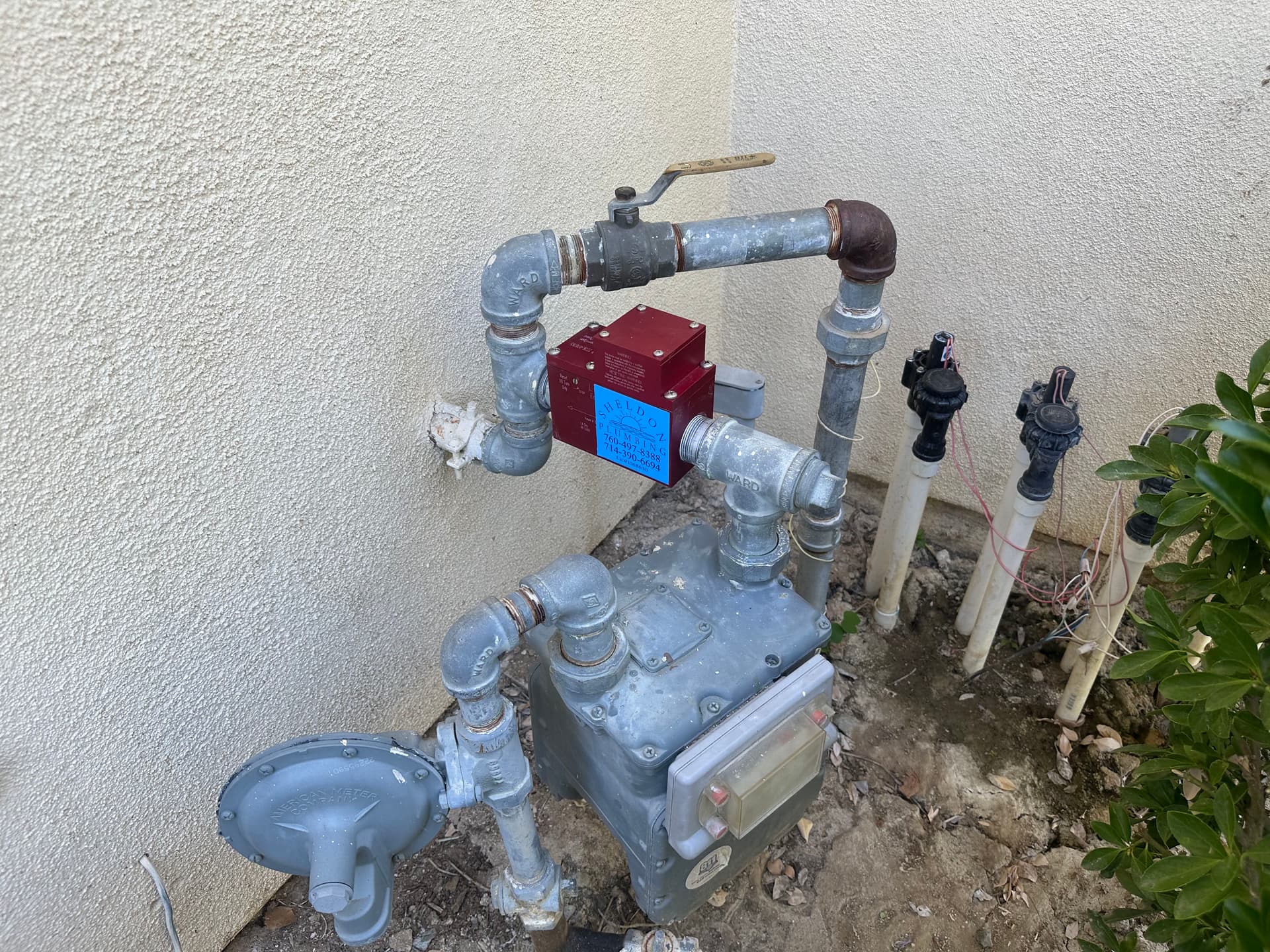
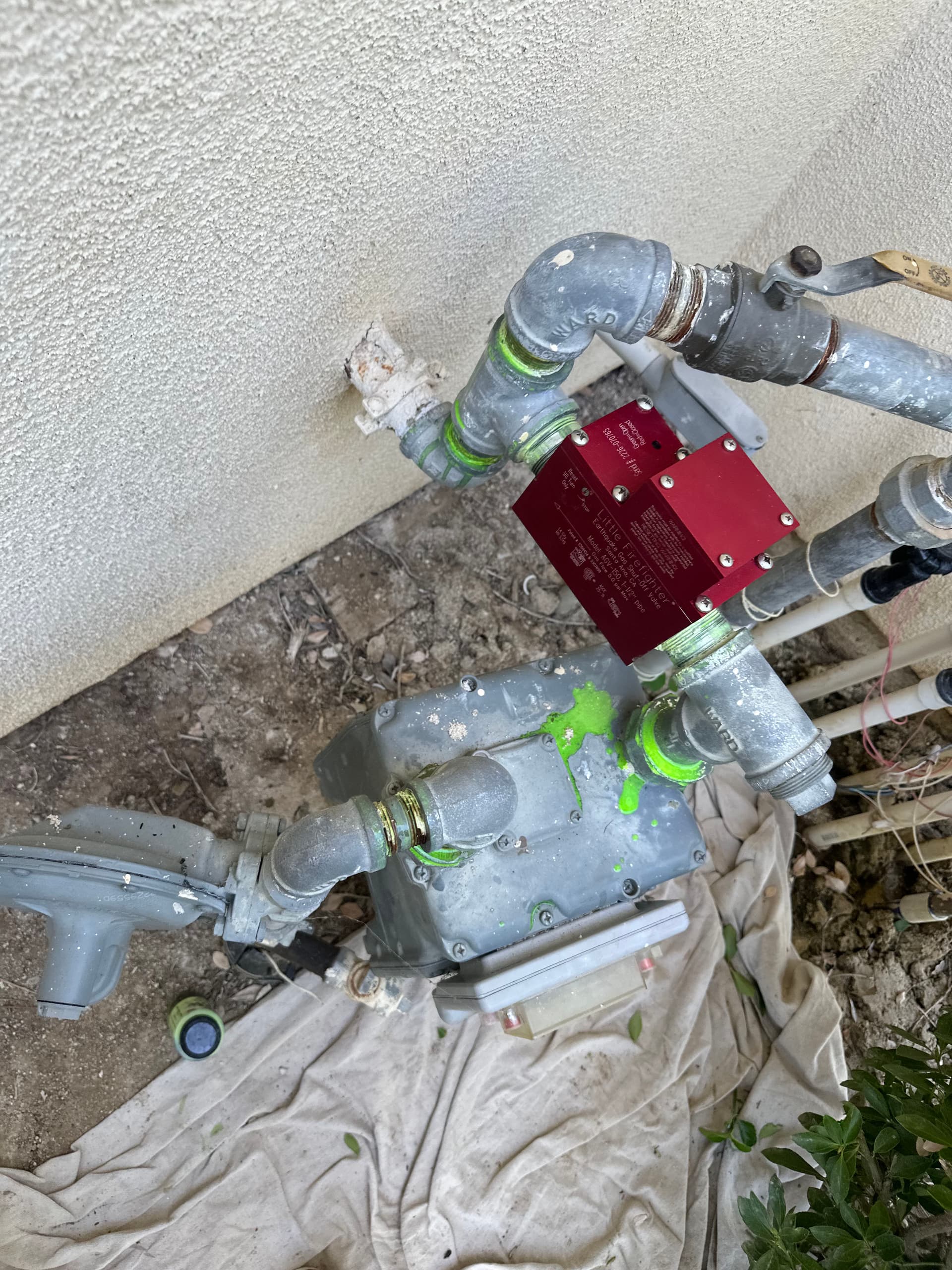
Sometimes a homeowner's insurance company is the one that kicks off a smart safety upgrade - and honestly, that's not a bad thing. That's exactly what happened here. The homeowner's insurer flagged the need for an earthquake shut-off valve on the gas line, and we were glad to take care of it.
An earthquake valve - also called a seismic shut-off valve - is a pretty straightforward device with a big job. When it detects ground movement above a certain threshold, it automatically cuts the gas supply to the house. No manual action needed. That matters a lot in the moments right after a quake, when a gas leak can turn a bad situation into a dangerous one fast.
The valve gets installed directly on the gas line, right at the meter. It sits inline with the existing pipe, so once it's in place it's just part of the system - out of sight and ready to do its job if it ever needs to. This is one of those upgrades where you hope you never need it, but you're really glad it's there.
We work on gas lines regularly - from new gas line installations to repairs and safety upgrades like this one. This type of work isn't something to hand off to just anyone. The installation needs to be done right, connections need to be leak-tested, and the valve needs to be positioned and oriented correctly to function as designed.
If your insurance company has asked about an earthquake valve - or if you've just been thinking about adding one - this is a solid upgrade worth doing. It's one of the more practical ways to protect your home and your family without a major project.